
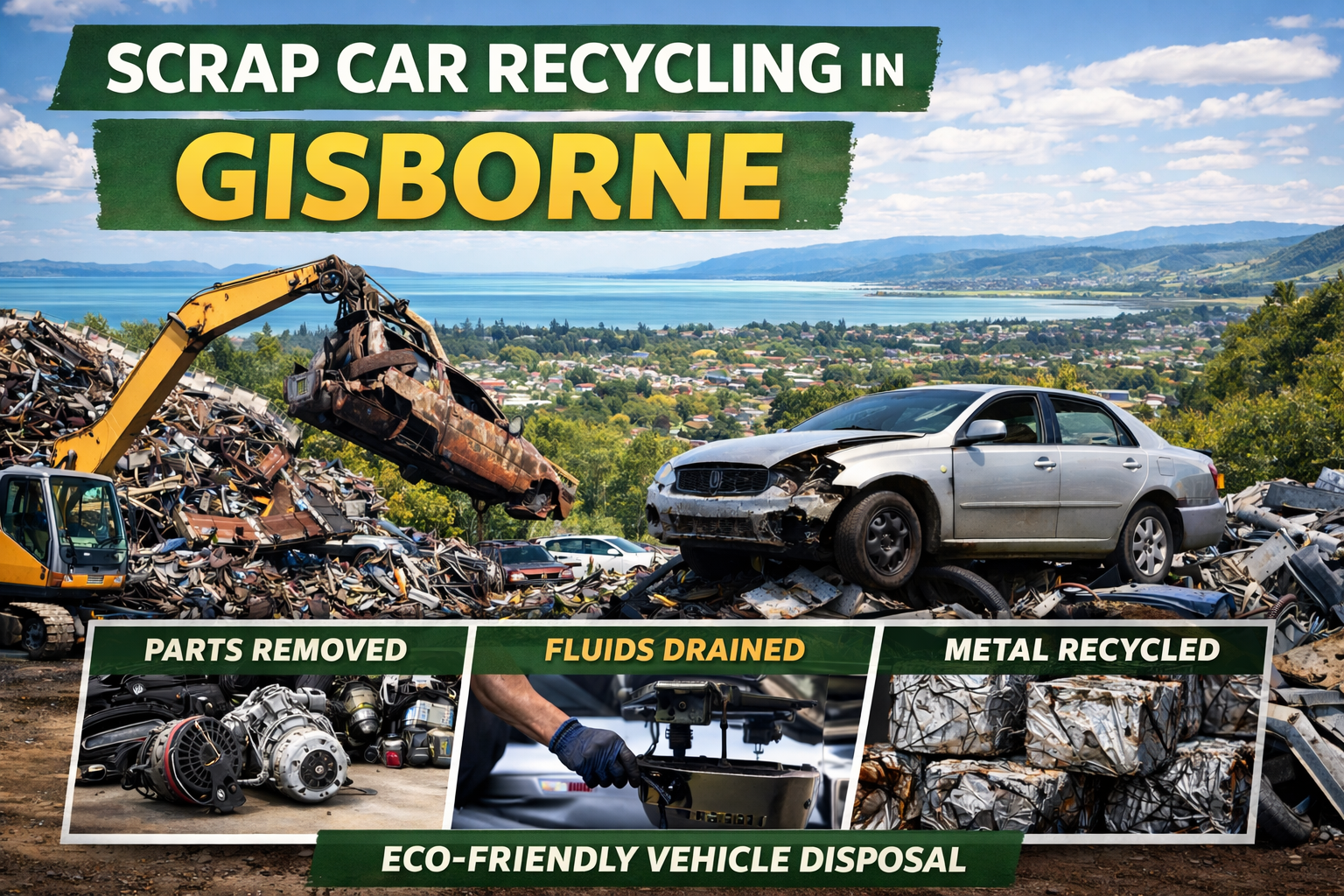
When a vehicle reaches the end of its life, many Gisborne residents are unsure what to do next. Leaving an old, damaged, or unused car sitting on a property can quickly become an eyesore and an environmental risk.
This guide explains how scrap car recycling works in Gisborne, what happens to end-of-life vehicles in New Zealand, and why responsible vehicle dismantling is important for both the environment and the local community.
1. When Does a Vehicle Become an End-of-Life Car?
A vehicle is considered an end-of-life vehicle (ELV) when it is no longer safe, economical, or practical to keep on the road. Common reasons include:
-
Severe mechanical failure
-
Structural or rust damage
-
Accident or flood damage
-
Repeated WOF failures
-
Deregistered and unused vehicles
-
Old vehicles left idle for long periods
At this stage, proper recycling is the safest and most responsible solution.
2. Initial Collection and Vehicle Assessment
Once an old vehicle is collected in Gisborne, it goes through a structured assessment process. This includes checking:
-
Vehicle weight and metal content
-
Reusable parts potential
-
Fluid locations and battery placement
-
Overall condition of the shell
This step ensures the car can be dismantled efficiently and safely.
3. Fluid Removal and Environmental Protection
Before dismantling begins, all hazardous automotive fluids are removed, including:
-
Engine oil
-
Brake and transmission fluid
-
Coolant
-
Fuel
-
Air-conditioning gases
Safe fluid removal is essential to prevent contamination of soil and waterways — particularly important in coastal regions like Gisborne.
4. Vehicle Dismantling and Parts Recovery
After depollution, the vehicle enters the dismantling phase.
Usable components such as:
-
Engines and gearboxes
-
Alternators and starters
-
Panels and doors
-
Wheels and tyres
are carefully removed. Reusing parts reduces manufacturing demand and helps extend the lifecycle of automotive materials.
5. Scrap Metal Processing and Recycling
Once dismantled, the remaining vehicle shell is processed as scrap metal:
-
Steel, aluminium, and other metals are separated
-
The shell is crushed or shredded
-
Materials are sent to licensed recycling facilities
Recycled vehicle metal in New Zealand is commonly reused in:
-
Construction materials
-
Manufacturing
-
Infrastructure projects
This makes vehicle recycling a key part of the circular economy.
6. Why Responsible Car Recycling Matters in Gisborne
Improper disposal of vehicles can lead to:
-
Environmental pollution
-
Oil and chemical leaks
-
Illegal dumping issues
-
Council compliance problems
Responsible auto recycling helps:
-
Reduce landfill waste
-
Protect land and waterways
-
Conserve natural resources
-
Support sustainable industry
7. How Gisborne Residents Can Dispose of Old Cars the Right Way
Responsible disposal ensures that old vehicles are:
-
Removed safely
-
Recycled legally
-
Processed in an eco-friendly way
Using a professional vehicle recycling and dismantling service ensures the entire process is handled correctly from start to finish.
8. Final Thoughts: Scrap Car Recycling in Gisborne
Old vehicles don’t simply disappear — they go through a carefully managed recycling process designed to protect the environment and recover valuable materials.
Understanding how scrap car recycling works allows Gisborne residents to make informed, responsible decisions when dealing with end-of-life vehicles.